Ankle Weights Causing Shin Pain? Here's What It Usually Means
Quick Answer: Shin pain from ankle weights usually means the added distal weight is altering your natural gait or overloading the muscles that lift your foot (dorsiflexors) — reducing the weight, shortening duration, or discontinuing use during walking specifically often resolves it.
You strapped on ankle weights for an extra challenge on your walk, and now your shins ache in a way they never have before. That’s a meaningful signal, not something to just push through with a higher pain tolerance.

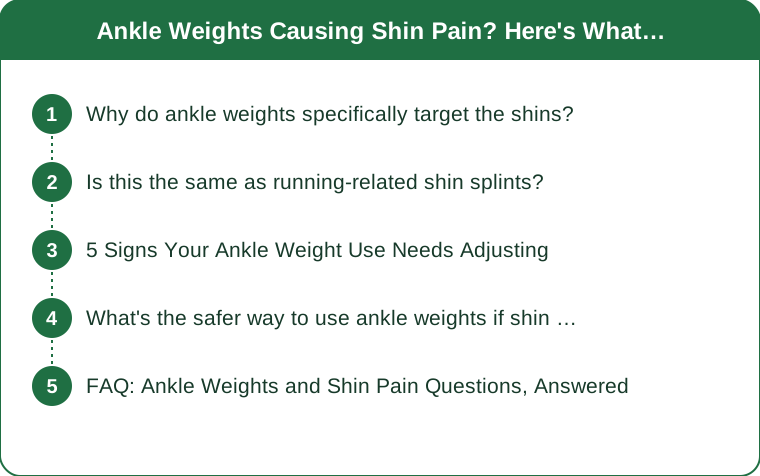
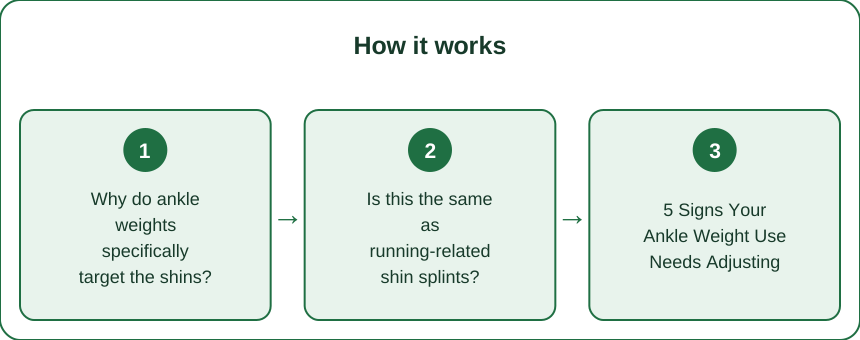
Why do ankle weights specifically target the shins?
Ankle weights add load at the farthest point from your hip, which disproportionately increases the effort your tibialis anterior (the main shin muscle, responsible for lifting your foot with each step) has to produce with every single stride.
This muscle isn’t built for sustained extra distal load the way your bigger leg muscles are — it fatigues faster, and overuse specifically shows up as the classic anterior shin ache many people mistake for typical shin splints from running.
Is this the same as running-related shin splints?
Related, but not identical. Both involve the tibialis anterior and surrounding tissue being overloaded, but ankle weights create this through added distal resistance during walking, while running shin splints usually come from repetitive impact — different mechanism, similar symptom location.
Either way, the tissue needs recovery time and reduced load to heal — treating it the same way (rest, reduced aggravating activity, gradual reintroduction) applies to both.

5 Signs Your Ankle Weight Use Needs Adjusting
1. Shin ache that starts during the walk, not just afterward — this suggests the load is too much for the duration.
2. Pain that’s worse the next morning than it was right after the walk — a classic overuse inflammation pattern.
3. Needing to consciously alter your stride to manage the weight — that’s your gait already compensating, a red flag on its own.
4. Using weights heavier than 1-2 lbs per ankle for walking — this is well above what most ankle weight guidance recommends for gait-based activities specifically.
5. Wearing them for extended walks (45+ minutes) rather than shorter, targeted segments — duration compounds the distal-load problem.
What’s the safer way to use ankle weights if shin pain has happened before?
Drop to the lowest available weight (often 1 lb) and test with short walks (10-15 minutes) before judging whether ankle weights work for you at all — many people who react badly to 3-5 lb weights tolerate 1 lb without issue.
Better yet for many goals: use ankle weights for targeted strength exercises (leg lifts, glute kickbacks) rather than for walking gait activities — this avoids the repetitive-stride overload mechanism entirely while still delivering resistance training benefit.
Give any shin discomfort full rest until pain-free before reintroducing weights, rather than continuing through mild pain hoping it fades.
FAQ: Ankle Weights and Shin Pain Questions, Answered
Are ankle weights bad for your shins in general?
Not inherently — the issue is usually weight that’s too heavy or duration that’s too long for walking specifically, not ankle weights as a category.
Should I keep walking through mild shin discomfort from ankle weights?
No — mild discomfort that’s ignored tends to progress toward true shin splints; stopping and reassessing at the first sign is the safer approach.
Are ankle weights safer for strength exercises than for walking?
Generally yes, since strength exercises don’t involve the same repetitive stride mechanism that concentrates load on the shin muscle over and over.
TL;DR:
- Ankle weights add load farthest from the hip, overloading the shin’s dorsiflexor muscle during walking
- Pain starting mid-walk or worse the next morning signals the load/duration is too much
- Drop to the lightest weight, shorten duration, or shift use to targeted exercises instead of walking
- Rest until pain-free before reintroducing weights rather than pushing through discomfort
This is general information, not medical advice — persistent pain deserves a professional look.
Keep Reading
This article is for general informational and styling purposes only. Fit, sizing, and product availability may vary.