The Ankle Weight Warning Sign Most People Miss Until It's Shin Splints
Quick Answer: A dull ache along the front of your shin bone (not the calf) during or right after ankle-weighted leg lifts is the early warning sign that precedes full shin splints — most people push through it for weeks before realizing it’s a pattern, not a one-off.
Ankle weights feel deceptively simple: strap them on, do your usual leg lifts, done. But the extra distal weight changes the mechanics of your lower leg in a way that quietly overloads the shin before most people notice anything is wrong.

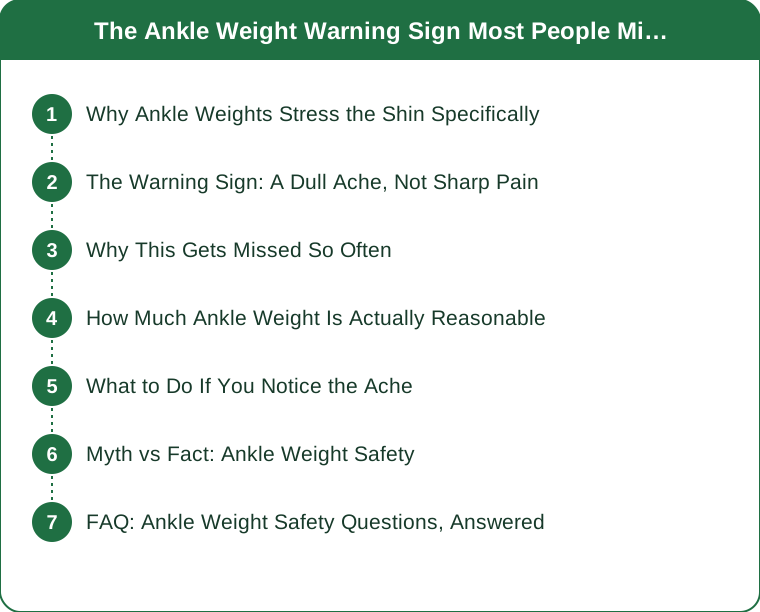
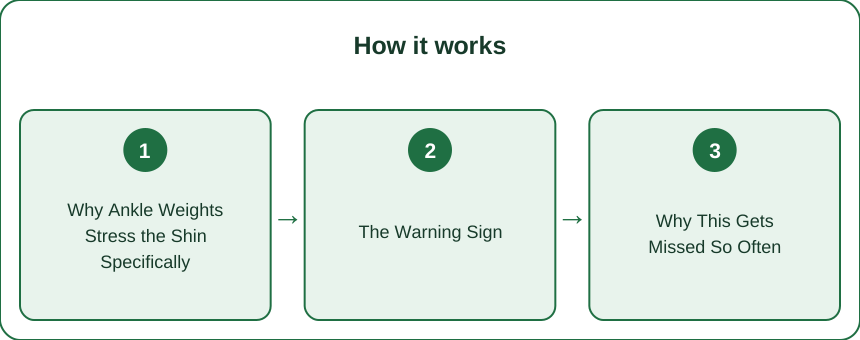
Why Ankle Weights Stress the Shin Specifically
Adding weight at the ankle — far from your hip, the joint doing most of the work — dramatically increases the leverage demand on your lower leg muscles, especially the tibialis anterior running along your shin. This is basic lever mechanics: the farther the weight from the pivot point, the harder the muscles near that far end have to work to control it.
The Warning Sign: A Dull Ache, Not Sharp Pain
Shin splints don’t appear suddenly — they build from repeated micro-stress. The warning sign is a dull, diffuse ache along the shin bone during or shortly after ankle-weighted exercises, distinct from normal muscle fatigue in the thigh or calf. Catching this ache and backing off for a few days prevents it from progressing into the sharper, more persistent pain of actual shin splints.
Why This Gets Missed So Often
People expect muscle fatigue from any resistance exercise, so a mild shin ache gets filed under ‘normal workout soreness’ rather than ‘specific overuse signal.’ The distinguishing detail: normal soreness fades within a day or two of rest, while shin overuse ache tends to return at the same intensity the next time you do the same exercise, even with rest in between.

How Much Ankle Weight Is Actually Reasonable
For most people, 1-3 lbs per ankle is the range where benefit outweighs joint and shin stress for standard leg lifts — heavier weights are better suited to slow, controlled strength moves (like weighted glute bridges) where the ankle isn’t doing rapid, repeated lever work.
What to Do If You Notice the Ache
Stop ankle-weighted exercises for 3-5 days, ice the area for 10-15 minutes if there’s any swelling, and when you return, drop to a lighter weight and lower rep count than before. If the ache returns immediately at the lighter weight, that’s a sign to see a physical therapist rather than continuing to self-adjust.
Myth vs Fact: Ankle Weight Safety
Myth: If it’s not painful during the exercise, it’s fine. Fact: shin overuse injuries are famous for feeling fine during activity and aching afterward — absence of pain in the moment isn’t proof of safety.
Myth: Ankle weights are just a lighter version of regular strength training. Fact: the distal weight placement makes them mechanically different, not just lighter — the same total resistance behaves differently depending on where it sits on your limb.
FAQ: Ankle Weight Safety Questions, Answered
How long should I wait between ankle-weighted sessions?
Give at least 48 hours between sessions targeting the same movement pattern, since shin tissue needs more recovery time than most people assume for repetitive lever-loaded stress.
Are ankle weights safe for walking?
Walking with ankle weights changes gait mechanics more than most people realize and is generally not recommended by physical therapists — the risk-to-benefit ratio is better with seated or lying leg exercises.
Is shin ache from ankle weights the same as regular shin splints?
It’s an early-stage version of the same overuse mechanism — catching it early is exactly what prevents it from becoming full shin splints.
TL;DR:
- A dull shin ache during/after ankle-weighted exercise is the early warning sign — not the calf, not sharp pain
- It’s mechanically caused by the weight’s distance from the hip joint
- Keep ankle weights in the 1-3 lb range for lever-heavy movements
- Rest 3-5 days at the first sign, then return lighter
- Recurring ache at a lighter weight means see a professional
The difference between normal workout fatigue and a developing overuse injury is whether the ache fades with a day of rest or comes back on schedule — pay attention to that pattern before it becomes something that sidelines you for weeks.
Keep Reading
This article is for general informational and styling purposes only. Fit, sizing, and product availability may vary.