When Ankle Weights Stop Helping and Start Working Against You
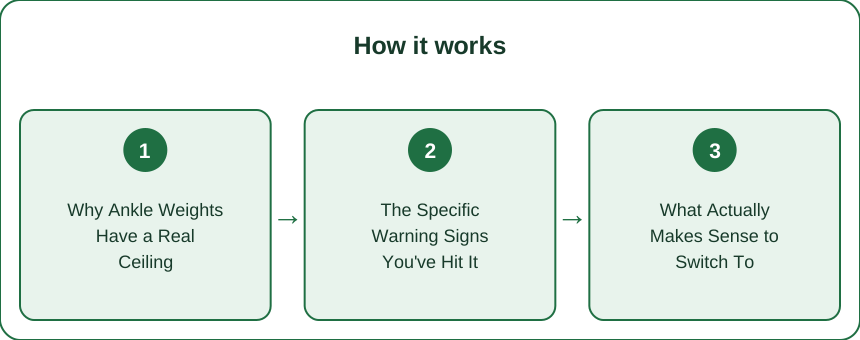
Ankle weights make a great entry point for adding light resistance, but almost nobody talks about the point where they stop helping and quietly start working against good form. There is a real ceiling to what they can offer. Here is why that ceiling exists, the specific warning signs you’ve hit it, and what actually makes sense to switch to.

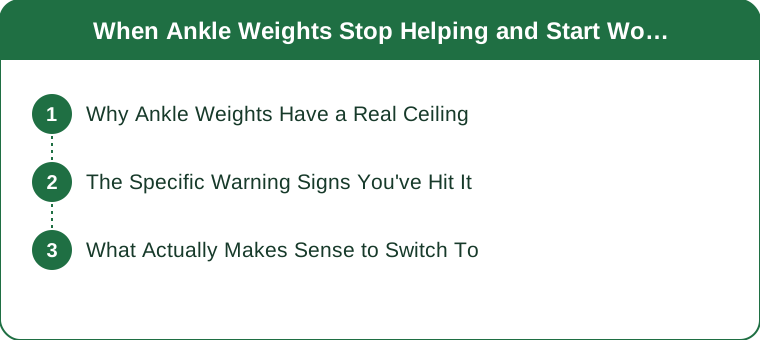
Why Ankle Weights Have a Real Ceiling
The mechanical limit: the the-fixed-low-resistance-problem (the typical ankle weights topping out around three to five pounds, a load that stops challenging muscles once basic strength improves — the low-ceiling-by-design), the the-distal-placement-issue (the weight sitting at the ankle creating a longer lever arm that stresses the joint disproportionately to the muscle benefit as load or reps increase — the joint-load-outpaces-muscle-gain), the the-momentum-compensation (the body learning to swing and use momentum to move the weight rather than controlled muscle engagement once the movement becomes too easy — the swinging-defeats-the-purpose), the the-limited-exercise-variety (the ankle weights only really adding value to a narrow band of leg-lift-style movements from the ankle-weights-workout-guide logic, unlike a resistance band or dumbbell that scales across many movements — the narrow-use-case-caps-long-term-value), the the-diminishing-novelty-effect (the body adapting to the same fixed load within a few weeks of consistent use, per the muscle-growth-needs-progressive-overload principle — the plateau-is-built-in-not-a-fluke), and the reframe (the ceiling as a structural feature of the tool itself, not a sign you’re doing something wrong — every light fixed-resistance tool eventually gets outgrown).

The Specific Warning Signs You’ve Hit It
What to watch for: the the-exercise-feels-easy-with-no-fatigue (the completing full sets without meaningful muscle fatigue by the last few reps — the the-clearest-signal), the the-form-starts-relying-on-swing (the noticeable momentum or swinging creeping into the movement instead of controlled, slow motion — the compensation-is-a-red-flag), the the-joint-discomfort-without-muscle-fatigue (the ankle or hip joint feeling irritated while the target muscle barely feels worked, a sign the load-to-benefit ratio has flipped — the joint-strain-outpacing-muscle-payoff), the the-adding-more-reps-doesnt-help (the pushing reps well past a normal range just to feel something, rather than the weight itself providing adequate challenge — the reps-cant-substitute-for-load-forever), the the-no-longer-matches-your-strength-level (the general strength gains elsewhere in your training clearly outpacing what this tool can challenge — the overall-progress-has-passed-the-tool), and the frame (the warning signs as easy completion, swinging form, joint-over-muscle sensation, and needing excessive reps — any one of these means it’s time to progress, not add more of the same).
What Actually Makes Sense to Switch To
The realistic next step: the resistance-bands-for-scalable-tension (the bands providing continuously variable resistance that increases through the range of motion, unlike a fixed weight, from the resistance-band-leg-workout-guide logic — the tension-scales-with-you), the the-cable-or-machine-leg-work (the gym cable and machine options offering a much wider and more precise load range for the same movement patterns — the same-movement-heavier-ceiling), the the-freeweight-progressions (the moving the load closer to the hip or using a dumbbell held differently for compound lower-body work rather than isolated ankle-level resistance — the compound-movements-scale-further), the the-keep-them-for-specific-uses (the ankle weights still having a place for rehab-style isolation or very targeted glute activation work, just not as a primary progression tool — the niche-use-not-retirement), the the-combine-rather-than-replace-during-transition (the layering a lighter ankle weight with a band or added reps during the switch-over period rather than an abrupt jump — the gradual-transition-beats-a-hard-swap), and the frame (the switch as moving to resistance bands or cable/machine work for continued progression, while keeping ankle weights around for their narrower, still-useful niche rather than treating the switch as throwing them out entirely).
Ankle weights have a real structural ceiling — a fixed low load, a joint-stressing distal placement, and a narrow range of movements they actually help — so most people outgrow them within weeks or months of consistent use. The clear signs you’ve hit that ceiling are completing sets without real muscle fatigue, form drifting into momentum and swinging, joint discomfort outpacing muscle sensation, and needing far more reps than usual just to feel something. The sensible next step is resistance bands or cable and machine work, both of which scale resistance far beyond what a fixed ankle weight ever could, while keeping the ankle weights around for narrower uses like targeted glute activation or light rehab work rather than discarding them entirely. Outgrowing a tool is a sign of progress, not a reason to second-guess the tool.
Keep Reading
This article is for general informational and styling purposes only. Fit, sizing, and product availability may vary.