Are Ankle Weights Actually Safe? Here's When to Use Them and When to Skip Them
Quick Answer: Ankle weights are safe for controlled, slow strength exercises (leg lifts, glute work) at 1-3 lbs to start, but they’re not recommended for walking or running, where they alter gait and add joint stress with every stride. Match the weight to the exercise, not the other way around.
Ankle weights look like an easy way to make any workout harder — strap them on and go. But the exercises they actually help and the ones where they quietly strain your joints are two very different lists, and walking sits firmly on the wrong one.

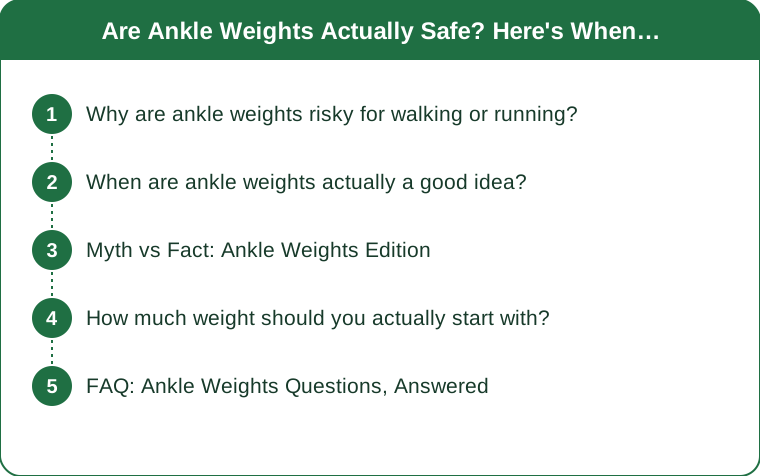
Why are ankle weights risky for walking or running?
Because they add resistance at the end of the lever — your foot — which multiplies force on your hip flexors, knees, and ankle joints with every single stride. Over a 30-minute walk, that’s thousands of repetitions of extra joint stress in a movement pattern your body already does thousands of times a week.
Gait research consistently shows ankle weights during walking or running also alter natural stride mechanics, which can create compensations that lead to knee or hip strain over weeks of regular use.
When are ankle weights actually a good idea?
Slow, controlled, non-impact exercises — think standing leg lifts, seated leg extensions, glute kickbacks, or Pilates-style leg circles. In these movements, the joint isn’t absorbing repeated impact, so the added resistance builds strength without the stride-altering downside.
Start at 1-2 lbs per ankle for these exercises, 2-3 sets of 10-15 reps, and increase only once the current weight feels genuinely easy — usually after 2-3 weeks.

Myth vs Fact: Ankle Weights Edition
Myth: Wearing ankle weights all day burns extra calories. Fact: The calorie difference is negligible, and all-day wear increases joint strain risk for essentially no benefit — this practice isn’t recommended.
Myth: Heavier is always better for faster results. Fact: Past 3-5 lbs per ankle, most people start compensating with momentum or other muscles instead of the target muscle, which reduces effectiveness.
Myth: Ankle weights are just for the ankles/calves. Fact: They’re most commonly used to add resistance to hip and glute exercises — the ankle is just the anchor point, not the target muscle.
How much weight should you actually start with?
1-2 lbs per ankle for most beginners, regardless of general fitness level — ankle weights load joints differently than free weights held in the hands, so err lighter than your instinct suggests.
Progress by half-pound increments, and stop increasing once you notice any joint discomfort (as opposed to normal muscle fatigue) during or after a session.
FAQ: Ankle Weights Questions, Answered
Can ankle weights cause knee pain?
Used in dynamic or impact movements, yes — the added end-of-lever resistance increases knee joint stress. Used in slow, controlled exercises, this risk drops significantly.
Are ankle weights good for beginners?
Yes, for seated or standing controlled exercises, starting light (1-2 lbs). They’re not a good beginner tool for cardio or walking-based routines.
How often can you use ankle weights?
2-3 times per week for targeted strength exercises is a reasonable frequency, with rest days between sessions targeting the same muscle groups.
TL;DR:
- Safe for slow, controlled strength exercises; not recommended for walking or running
- Start at 1-2 lbs per ankle and increase in half-pound steps only when it feels easy
- Heavier isn’t better past 3-5 lbs — most people start compensating with momentum
- Joint discomfort (not muscle fatigue) is the signal to stop increasing weight
Save ankle weights for controlled leg and glute work, and leave them off for your walks.
Keep Reading
This article is for general informational and styling purposes only. Fit, sizing, and product availability may vary.